Wednesday at 2 PM (UTC +1)

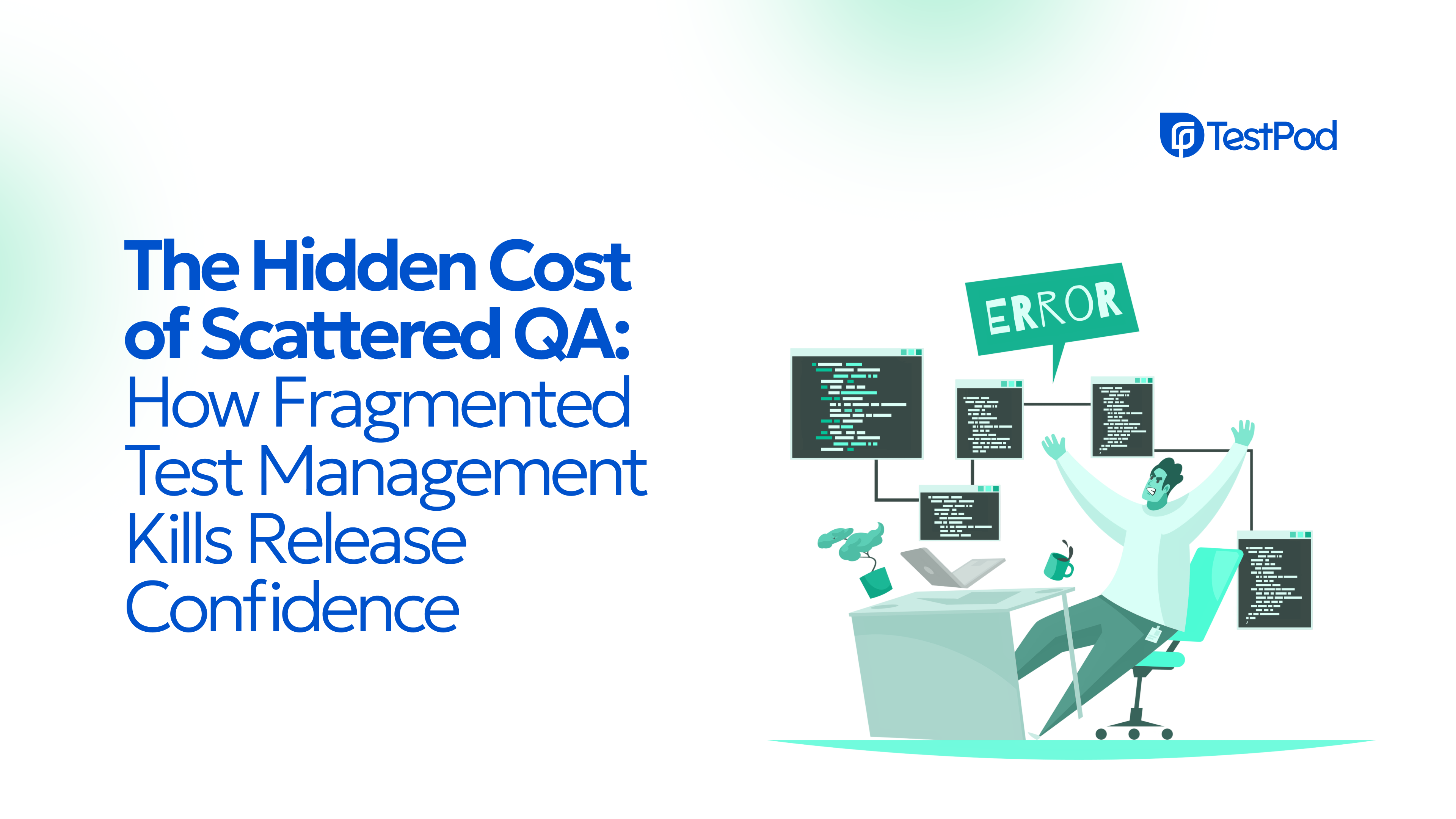
Most teams don’t struggle with testing because they lack tools. They struggle because their testing efforts are scattered.
Test cases live in one place, automation scripts in another, bug reports somewhere else, and release decisions are made based on incomplete or outdated information. On paper, everything looks covered. In reality, no one has a clear picture of quality.
This is the hidden cost of fragmented test management, and it shows up exactly where it hurts the most: release confidence.
The Illusion of Coverage
Ask most teams if they’re testing enough, and the answer is usually yes.
There are test cases written. Automation is in place. Bugs are being tracked. CI pipelines are running. From a distance, the system appears functional. But dig deeper, and cracks begin to show.
Test cases aren’t updated when features change. Automation scripts pass even when critical flows break. Bug reports lack context. And when it’s time to release, teams rely on gut feeling more than actual insight.
This creates an illusion of coverage, where activity is mistaken for effectiveness.
The problem isn’t that testing isn’t happening. It’s that it isn’t connected.
When QA Becomes Fragmented
Fragmentation doesn’t happen overnight. It builds gradually as teams scale.
A team starts with simple workflows, maybe a shared document for test cases and a basic automation setup. As the product grows, so do the tools:
- A test case management tool for manual testing
- A separate framework for automation
- Issue tracking in a different system
- CI/CD pipelines running independently
Each tool solves a specific problem. But together, they introduce a new one: disconnection.
There’s no single source of truth for:
- What has been tested
- What failed
- What changed
- What is safe to release
Instead, teams piece together information from multiple places, often under time pressure.
The Real Cost: Lost Release Confidence
The biggest impact of scattered QA isn’t inefficiency. It’s uncertainty.
When test management is fragmented, teams lose the ability to answer simple but critical questions:
- Are we ready to release?
- What risks still exist?
- Which areas of the product are most vulnerable?
Without clear answers, release decisions become reactive.
Teams either delay releases unnecessarily, waiting for more “certainty”, or push forward with blind spots, hoping nothing breaks in production.
Over time, this erodes trust:
- Developers lose confidence in test results
- Product managers hesitate to ship
- Stakeholders question the reliability of releases
And ironically, even with more tools and more tests, confidence continues to decline.
Why More Tools Don’t Solve the Problem
A common response to QA challenges is to add more tools. More automation. More dashboards. More reporting layers. But fragmentation isn’t caused by a lack of tooling; it’s caused by a lack of cohesion.
When tools don’t communicate effectively, they create silos:
- Automation results don’t reflect real user flows
- Test cases don’t align with the current product behaviour
- Bug tracking isn’t tied to test coverage
Adding more tools without addressing this disconnect only increases complexity.
What teams need isn’t more testing activity. They need better test management.
Reconnecting the QA Workflow
To restore release confidence, testing needs to be unified.
That doesn’t mean replacing every tool. It means creating a system where testing activities are:
- Visible
- Structured
- Connected
Test management becomes the layer that ties everything together.
It provides:
- A clear view of coverage across manual and automated tests
- Real-time insight into failures and risks
- Alignment between testing efforts and product changes
When this layer is missing, QA becomes fragmented. When it’s present, QA becomes strategic.
Where AI Changes the Game
Traditional test management systems often rely on manual updates and rigid workflows. As products evolve faster, these systems struggle to keep up. This is where AI-powered test management introduces a shift.
Instead of simply tracking tests, AI systems can:
- Identify gaps in coverage
- Suggest relevant test scenarios based on changes
- Highlight risk areas before release
- Connect insights across testing activities
This transforms test management from a passive system of record into an active decision-making tool.
How TestPod Addresses Fragmented QA
TestPod is built with this exact problem in mind. Rather than acting as just another layer in an already complex toolchain, it focuses on bringing structure and clarity to testing workflows.
With TestPod, teams can:
- Organise test cases in a way that reflects actual product behaviour
- Align testing efforts with development changes
- Track execution across both manual and automated testing
- Gain a unified view of quality before release
Its AI-powered capabilities help teams go beyond tracking:
- Surface gaps in coverage
- Provide insights into test effectiveness
- Enable better release decisions based on real data
The goal isn’t to add more testing, it’s to make existing testing meaningful and connected.
From Activity to Confidence
The difference between scattered QA and effective QA isn’t effort. It’s visibility. When testing is fragmented, teams operate in the dark. When it’s unified, they operate with clarity.
Release confidence doesn’t come from running more tests. It comes from understanding:
- What those tests cover
- What they don’t
- And what that means for the product
With the right test management approach, teams can move from:
- Guessing → Knowing
- Reacting → Planning
- Hoping → Shipping with confidence
Final Thoughts
Fragmented QA is easy to overlook because, on the surface, everything appears to be working. Tests are running. Bugs are logged. Releases are happening. But beneath that surface, disconnection quietly undermines confidence.
In 2026, the challenge isn’t whether teams are testing enough. It’s whether their testing efforts are connected, visible, and actionable. Because in the end, the real cost of scattered QA isn’t inefficiency. It’s uncertainty at the exact moment when confidence matters most, right before release.